Tuesday, May 16, 2017

The role of Savita Ambedkar in the life of Baba Saheb Ambedkar : Vijay Surwade


Vidya Bhushan Rawat in conversation with Mr Vijay Surwade


Vijay Surwade is a living encyclopedia of Ambedkarism in India. And it is not merely about his indepth and detailed knowledge of life and time of Dr Baba Saheb Ambedkar but also his passion to collect Baba Saheb’s original photographs of different events as well as his original documents and letters. His collection of these original documents related to Baba Saheb Ambedkar is a national asset. He worked very closely with Mai Saheb Ambedkar, wife of Dr Baba Saheb Ambedkar. In this very important conversation, perhaps for the first time, an Ambedkarite speak in depth about how Mrs Savita Ambedkar faced all her life allegations about her maltreatment to Dr Ambedkar. Vijay Surwade ji’s documents prove categorically that a few of the Ambedkarites used their political ambition over the truth and for that Mrs Savita Ambedkar became an easy and soft target. We are placing some excerpts of the entire conversation of Mr Vijay Surwade with activist writer Vidya Bhushan Rawat, available on Lokayat channel at Youtube. This is just a very small portion of the entire conversation and we hope one day, we will be able to transcribe the entire script for the benefit of the viewers in English language.

VB: How did you come in touch with Ambedkarism? What inspired you the most?
VS: I was born in Jalgaon district. Right from childhood we had heard about Baba Saheb. My mother’s father was a Gardner in railways. He was illiterate but a staunch Ambedkarite. He used to go to attend the meeting of Dr Baba Saheb Ambedkar. He used to tell me about the movement, about Baba Saheb and his vast knowledge. Hearing from him the curiosity increased day by day. So out of curiosity, I started collecting his photographs. I was three years old during the Mahaparinirwana of Baba Saheb in 1956 so no opportunity to meet him but now I feel if I were born a few years earlier, I would have definitely met him. The curiosity increased day by day, it was increasing as I was growing and learning. I passed matriculation and joined Siddharth College and I was staying in the hostel in 1970. I completed my graduation in 1974 and during this period I got to know many things, it was changing period for me. Dalit Panthers had started during the same period. Raja Dhale, Arun Kamble, J V Pawar and myself would sit together and discuss things. I was more attached to Raja Dhale. He had a different take on everything so he also liked me and the vice versa. We used to read and share. Fortunately, Siddhartha college library was so rich as all the original copies Baba Saheb’s work were there. I started reading them even when I did not know much English as upto 11th, I was studying in Marathi medium. Though English was there in 5th standard yet because it was not my first language hence could not do much in this but after college, the situation changed as Bombay University, right from the beginning is English medium. So, I started reading books of Baba Saheb. I bought an oxford dictionary English Marathi and  started writing meanings of tough words in Marathi and that made me understand the meaning of the word that Baba Saheb had used in his books.
In Childhood, I had kept one note book and whatever photograph that I got, I would paste it in the notebook. There were photographs in wedding invites etc, I would put all the photographs in my note book. So to that extent my curiosity was there about Baba Saheb. When I came to Mumbai and saw original photographs of Baba Saheb, then I realize the difference between the original photographs and the artificial ones.  Then I started searching original photographs. In the beginning, I would go to photo studios. I was living in Hostel, near Dadar that time. Then I started locating colleagues of Baba Saheb in the movement. Asking about how he looked like. If they had any papers or photographs. They would not give me photographs because of their bad experiences. Once Bhaiya Saheb Ambedkar organized a photo exhibition and he put a lot of photographs but people took it and lot of important photographs were lost. I used to pursue the case if they had photographs but people would insult me too. People would lie to that I have photographs even when they did not have. I did not have money as I was poor but I had to pursue that I would buy them. Even if I had photographs, I had to have negative. My father was an clerk in municipality and my mother died when was in 8th standard. My father used to send me some money.
Then my collection was becoming bigger. There was Dil studio in Dadar near Baba Saheb’s House. There was a number of photographs. Negatives were of bigger size. They were 10X12 inch It was difficult to find. I used to go there then he used to do. It was not easy to find. I went everywhere to meet individuals, organizations, institutions. I learnt so many things from these experiences but I learnt how to allure people to get the photographs that I would give you bigger size. Come along with me. But I learnt from my experiences.
VB: How many photographs?
VS: I have not counted but those are in thousands. Those are from all over India. I did not go to foreign countries but I have two photographs from round table India which Jabbar Patel gave me. But from India, I travelled everywhere. I joined Bank after graduation. I got married.
VB: Tell us about the conspiracy theories that Mai Saheb faced about Baba Saheb. All these need to be cleared as it is too much and people are using it for their own purposes. What is your impression?
VS: I have been hearing this since childhood. Some people said that she poisoned him in buttermilk. Other said she was giving him slow poison. Lokhande said that she killed him throttling him in the pillow. There were so many conspiracy theories. Was Baba Saheb such a small child to be done like that.
Baba Saheb wrote a preface on Decmeber 5th about her role. Most of the people like Sohan Lal Shastri and others used to feel bad when Mai Saheb would deny. So most of the friends of Baba Saheb would come him unusual time and without any preplanned visit. She was a doctor as well as a wife. So she had to play dual role. Today, doctors don’t allow people to meet even wife. Wives’ will have their own concern. She was a doctor and always concerned about his diet. She had written about his diet and was very particular about Baba Saheb. She was strictly going according to the time table required for Baba Saheb from the point of view of medicine, health, food and rest. If anyone comes in between why should she allow. He was doing such an important task for community, his time was important. How would a wife concerned so much allow people to disturb him. We were ultimately deceiving Baba Saheb. We are trying to tell as if Dr Ambedkar was fool. They had a love affair for over a year. She was Baba Saheb’s lover. My daughter has written a book on that.
VB:  Tell us about Mai Saheb’s relations with Baba Saheb
VS: I came to her contact when I was a student in Siddharth College. She used to come to Baviskar’s house. It must have been around 1972. She knew I have been working on Baba Saheb and it was a passion for me. One day she called me and showed me all the letters between them.  They were big letters.  Each one letter of baba sahib to her are 18,20, 25 pages. They were in relationship for a year. She had written to Baba Saheb, huge bunch of letter she showed to me and said these are the ‘’motio ki mala’’. His hand writing was so beautiful. She said, just have a look, don’t read them. They were very personal letter. It was between 1947 and 1948.  They wrote around 40-50 letters to each other during this period. All letters were lengthy. All the letters of Baba Saheb was in mid night as he was very busy. Her name was Sharda and Baba Saheb used to call her Saru and later named her Savita. Her letter-head mast was S and Baba Saheb was B. In one letter Savita wrote to him that she would like to come and take care of him as he needed a doctor to take care of his health particularly. Baba Saheb wrote to her that he would only love to bring her legally after duly getting married. He was advised to keep a nurse. He wrote to Mai too. Fortunately or unfortunately, my people consider me as their god. My opponents are afraid of my character, which he wrote to Mai.
VB: Did Baba Saheb ever speak to his son Yashwant about corruption?
VS: Mai wrote it. It was a story of two builders who wanted to influence Baba Saheb when he was labour Minister in Viceroy’s Council and CPWD was under him. It was related to some contract and Yashwant had come to Delhi. As soon as Baba Saheb came to know about this he got enraged. He asked Yashwant to leave immediately for Mumbai and need not to come to Delhi.
 VB: Do you think that Mai never deserve how people behaved with her after the demise of Baba Saheb ?
VS: I was helping Dhanajay. He knew that I was close to Mai. Keer wrote what Nanak Chand Rattu gave to him. I can prove all this by document. Nanak Chand gave to Khairmudhe and Keer. He wrote that Baba Saheb was very sad during his last days. Baba Saheb was singing was a sign of happiness. It was a doha. He finished his thesis before going to bed. Kautslyayan said that the preface was on the table. The biggest credit he gave to Mai Saheb.. I was a dying flame by a doctor. Successful rekindling of this dying flame is due to my doctor wife and Dr Mavalankar. I am immensely grateful to them. She was an Ambedkarite, She was a Buddhist lifelong. Many people did not accept her. But this is changing. J V Pawar, Arjun Dangle says that we did not do justice to Mai. Shanti Swroop Baudh too was of the opinion formed by Rattu  but later all of them changed due to my work. People did not inform us about Mai’s contribution.  Baba Saheb married to Brahmin but she was a Buddhist. She became Budhist. I have seen her very closely. For Riddles she spoke passionately.
VB: What is her role in the Riddles movement?
VS: She was a leader. She went all over, spoke everywhere. She spoke against Bal Thackery. Mai Saheb was very particular about the unpublished work of Baba Saheb. And this is 1959, when none knew about her except Rattu. For unpublished work, she got Mr Jadhav. She did not get any Royalty though Prakash get it even today. I have the agreement. I was close to both Dhananjay Keer and Mai. I have the original copy of the letter. When he received that he admitted the contribution of Mai Saheb. He realized that a lot of injustice was done to Mai Saheb. In fact Keer wanted to write a book on her but Mai never wanted him to do so.
I asked her you killed Baba Saheb when I met her. I heard it from childhood. I felt she would be angry but she laughed. ‘What is the new thing that you are asking’, she said. ‘I have been hearing this for years’. Later Dhale discussed with me and we felt that Baba Saheb did all of the work because of her. It would have been impossible if she was not cooperative to him. She was with him at the most critical moment. She would have stopped him against Deeksha.  Mai and Baba Saheb took deeksha May 2, 1950, at Birla Mahabodhi Vihar in Delhi by Aryawansh Bhante. Bhadant Anand Kautslyayan also wrote about this deekhsa.
I felt she should allow Keer to write about her life. I have the audio-recorded Mai’s original voice about herself. Mai was very active. She would go to meeting and conferences. Later Keer too got ill and died so the project remained unfulfilled. She would tell me so many stories. And I felt all those stories must come out. I used to think with that positive angle. When she would tell us her memoir, I felt Mai’s contribution must come out. Letters must come out at any cost. There are a lot of personal things, I removed them and decided to write.  She used to speak Marathi but she had command over English. I would help you to write memoirs and then she accepted it.
I decided a frame about the book. Baba Saheb’s up and down must come out. What was his physical position when Mai came in his life? What work Baba Saheb did during the time when Mai came in his life.
So, I decided since 1930. All the health issues, I had. At one point of it became too critical. Nobody was there to help him. The stage when he had blood pressure. ‘’You are doing great work. I needed to help him. He need my help, it was saying my doctor inside me. I took up the decision’’, Mai said.  It was Mai’s revolutionary step despite being Brahmin and that too a medical doctor from Grand Medical College during British from 1937 she decided to marry Baba Saheb. Sohanlal wrote about her that she was a nurse but fortunately I got the original certificate. I have the original certificate of Mai.
About Role of Nanak Chand Rattu
It has been dubious. I knew him from closely. Mai was too stubborn some time. Bhiaya Saheb was fighting with her on property issue so Shankaranand Shastri and Nanak Chand Rattu had sympathy for him. Many people would ask me how I could stay with her. She was blunt. She used to say, I am Ambedkar, hence it is my right. When I don’t take anything from any one then why should I be afraid?
The bungalow at 26 Alipur Road was on rent. It was owned by Sivai’s Maharaja.  Baba Saheb had helped him through adjudication. They had two bungalows 26 and 27 and wanted to sale them to Baba Saheb for one lakh rupees each. Dr Ambedkar said he did not have the money. So they had the problem of staying in Delhi after he resigned from the government. So, the Maharaja gave it on rent. Mararaja died and the new legatees asked Mai to leave the place. She did not vacate it. She went to the court. She came to Mumbai to live with her relatives. People blamed her that she sold the property. Rattu used to assist Mai Saheb. He was continuously in touch with her. I have a letter in 2001 written to me seeking my cooperation to get help from Mai. One case, Mai could not go and court gave ex-parte order. The bungalow was sealed and the household items, precious books and belonging of Baba Saheb were thrown away. It was in 1967. It was raining so many things was left out. So it was distributed into three places to keep them safe among Rattu, Shastri and others. You will be surprised that Mai stayed a Rattu’s place. So Rattu was speaking against her outside but kept her inside her.
Shankaranand used to meet me whenever he used to come to Mumbai. We were travelling in Bus to Mazgaon. He told me Rattu was stooge of Mai. After Shankarnand told me, I felt it. He helped in selling the plot. I asked Mai and then she told me that he kept me at our house. He was just a typist. He used to do initial in whatever he typed. I told her the copy of his letters which she did not know. She was shocked. He has so many letters written on inlands to Mai.
Mai would call me around three to four times. She told me Rattu came and added, ‘’I asked him what has you written about me. He said, I have been helping you’’. Then she threw file at him and just asked him to leave the place. I think this is about 1990s. In 2001 he wrote to me. He gave much ‘’belonging’’ of Baba Saheb in Chichuli and Wolver Hampton. but many things are absolutely duplicate but most of the stuff was given provided by Mai. Many things I have heard that he ( Rattu)  purchased from old market and gave them in the name of Baba Saheb. He died in 2002. Mai passed away in 2003. He knew that Mai has known it. He wrote to me in 2001. He said, you are so close to Mai. It is easy to get the things done. Actually  the things donated to Chicholi  was given to Mr Godbole. There was some misunderstanding. Godbole knew things. Rattu wanted a letter from Mai that the stuff that he has and given to Godbole belonged to Rattu. I typed it. By 2001 Mai’s conditions had deteriorated. Her memory was lost. My wife cleaned her many time. I had typed the letter. I felt it was not right to get signed. Rattu send me a letter send me a sample of letter head of Mai Saheb on her behalf. In 2002 he died and in 2003 Mai passed away.
This is an important part of Ambedkarite movement. Why should a woman who was dutifully and legally married to Baba Saheb Ambedkar is seen as conspirator and outsider. She was boycotted. It shows that caste system has so much in our blood that we could not give her justice. Baba Saheb gave us the path of Buddhism. How much have we succeeded? There are success stories. The dream of Prabuddha Bharat is yet to be fulfilled.  There are very few examples. I would say sadly. Everyone is working according to his own agenda. We failed politically completely.
What is the use of joining hand with BJP. It is painful.
We do not want Dalit word but as a movement we needed Dalit Panther today. Mai Saheb used to say, don’t dissolve it. Let it like be an aggressive wing, fighting against injustice. She said in speech. Make it three wings: Political, religious and educational. Those who are interested should lead it so there would not be fight against it. So if Dhale was interested in religion so he should lead that. Ramdas was interested in politics so he should lead that. It was actually a very wise advice.
Today there are over 100 groups of RPIs. Everything has become opportunist. It is not going accordingly. They must unite. During the riddles movement, all people have got united. They were together fighting against ban on Riddles. I have heard Kanshiram saying that you worship anyone but just vote us. I heard it in Jabalpur and did not like it.
VB: What are you planning to protect this ‘national asset’ that you have which is of great importance as a history of Ambedkarite movement? Many stories people have not heard. They have remained unknown.
VS:  I have not begged from any one. None want to become like Baba Saheb. People do not care. They are unable to bring real Baba Saheb. We are not bringing him to people. It is backstabbing with the movement. Baba Saheb became very sensitive when he saw and said if do not take this movement any further don’t take it back.
VB: Where is the movement?
VS: I don’t know anything of politics. I am not interested. Practically everyone sknows me personally. We lived together in hostel including Gavai, Kavade. I am not interested in their politics.
VB: An Ambedkarite you have lived your life. What are those things you won’t compromise?
VS: We can’t survive on our own politically but We will have to alliance with those who ideology with Baba Saheb. We can’t compromise with Hindutva at any cost. We can’t compromise with Psychology, philosophy which made us enslaved till date. It is not essential that they agree to everyone but you have to agree on complimentary ideas. He had good relations with M N Roy. Baba Saheb helped him and it was debated in Parliament. People have become selfish. How could an Ambedkarite be part of Shiv Sena?
VB: What is your vision and what would you appeal to Ambedkarites world over?
VS: I won’t ask anyone to help me. I have two options. First, we have a Foundation. Athawale has promised. Mai has done so much and we must do it for her. You make a trust and I will get the land. Mai used to give her ( my wife) saris, shawls, chashma, letters, photographs to my wife and we have kept them as safe. We have to preserve them but for that one need money. Athawale is saying that he would take me to chief minister.  Athawale used to give me a lot of respect because of Mai. He gives respect to all. Second, fortunately, I retired as deputy general manager, IDBI. I have a flat in the society. If I get my possession then I will live there and leave this house as a memorial. Some body will be here. We will donate the material. WE need to preserve the material. Third option, Symbiosis is ready to do this. They have money, place and machinery including technology. If I give them then, they can preserve it. So these are three options. My son is in USA. I don’t know whether he comes or not. He reads but may not have the same interest. The way I have done, he might not have the same. This is property of Ambedkarite society. It is of Ambedkar Samaj.  I don’t consider it for any one. I will donate it.


Monday, May 15, 2017

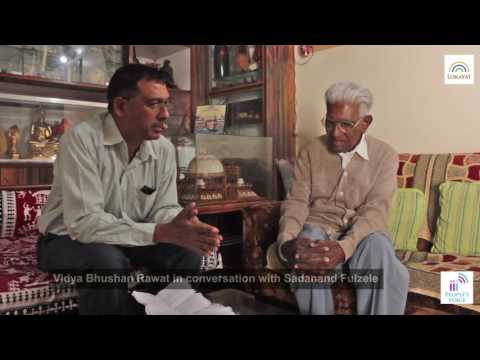
Sadanand Fulzele : An eyewitness to the historic celebrations of Dhammadeeskha in 1956

Sadanand Fulzele : An eyewitness to the historic celebrations of Dhammadeeskha in 1956

By Vidya Bhushan Rawat

It is astonishing that not much is known about the man who was one of the prominent figures of Dr Baba Saheb Ambedkar’s historical return to the roots of Buddhism along with nearly half a million people at the Deekshabhumi ground in Nagpur on October 14th, 1956. Interestingly, Sadanand Fulzele was not an ordinary man in any senses during that period as he was the Deputy Mayor of Nagpur Municipal Corporation and that too with consensus. He was elected on Scheduled Caste Federation ticket for the Corporation in 1952 and won by just one vote to his nearest rival. A man dedicated to Baba Saheb Ambedkar’s mission for life long, I asked him as how did he get in touch with Dr Ambedkar and what was his involvement with Deekshabhumi function.

‘When I was Deputy Mayor that time the states got reorganized. Nagpur got merged in Bombay I.e Maharastra. We people, a deputation of corporation leaders, went to Delhi to meet Govind Ballabh Pant to demand Nagpur as the capital of Maharastra. In Delhi I stayed with our Member of Parliament Tahir Ali Saheb. That time Baba Saheb had written about Deeksha on 14th October to Mewa Ram Kawade and Godbole to come and meet him. Baba Saheb asked them whether arrangements could be made for the Deeksha. They said, yes it will be done as our own person was Deputy Mayor in the corporation. They told him that I was in Delhi. Then he asked me to come over. Then I went to meet Baba Saheb along with senior person in All India Radio at his residence 26 Alipur Road in the evening. We sat there near the gate. After some time Baba Saheb came with the help of Nanakchand Rattu and sat in front of us on the reclining chair. He said, Mewa Ram Kawade and Godbole came and we have now fixed on October 14th. Will you arrange the programme. I said yes. And that was the time Baba Saheb put the responsibility of the programme on me.

After returning from there, I, Waman Ram Godbole, Kawade and others started looking for a suitable place where deeksha ceremony could be organized and we found this place suitable as there was a big slope and even if the rains come the water would easily flow out. So, finally the selection of Deekshabhumi was done. Baba Saheb’s programme was also fixed. Now, the correspondence and other details were to be done and hence the entire responsibility of the programme  fell on my soldiers.’’

It was a huge celebration he says. Photographs of the functions are well placed decorating his drawing room in Nagpur and each event reverberate his mind in passion. ‘’First Baba Saheb took Deeksha through Chandramani ji. He was so overwhelmed that he did not raise his head. Then Chandramani ji gave him panchsheel. Then he got up and said now I have become Buddhist. All those who want to have deeksha should stand up. Then baba sahib gave them trisharan and panchasheel.. and later gave them 22 bows. The people were there for two days. Baba Saheb spoke for nearly two hours. Later in the night Baba Saheb departed for Chandrapur.’’  ‘’Was there any opposition to Dhammadeeksha’’ , I ask
‘’What would have they done ? Many people felt that Baba Saheb should not take Dhamma deeksha and  newspapers reported such stories, but Baba Saheb responded to all the quarries’’ as the programme went for two full days till October 15th evening and the number of people remained the same.

Sadanand Fulzele is not only witness to historical legacy of Baba Saheb but also part of the political party i.e. Republican Party of India and felt that If Baba Saheb had survived a few more years, perhaps the situation would have been different. Unfortunately within two months he passed away and things that would have happened never happened.
He felt that the fight for power was the real reason for disintegration of Republican Party of India. “It was for power. In 1957, RPI was established. Avade Babu wanted to become the Secretary. Dada Saheb wanted Barrister Khobaragade. But Avade Babu did not know it and hence next year Avade Babu, B C Kamble and other formed a different party.
I ask him that there was an allegation that Dada Saheb never wanted to Dhammadeeksha ceremony as he felt politically it would have been detrimental for the party. The charge was leveled none other than Bhau Lokhande, in a conversation with me. ‘No it is not true’, says Sadanand Fulzele and added that some people who wanted to be in the elections that we should not go for conversion. But according to Fulzele, Baba Saheb’s decision was ‘absolutely correct’.

After the Mahaparinirwan of Baba Saheb, Mr Sadanand Fulzele devoted his time and energy to strengthen the Republican Party of India. He was the Nagpur city president of it and later became Secretary of the state followed by All India secretary.  I ask him that Baba Saheb has become so powerful that even the opponents are chanting Jai Bhim. Many Ámbedkarites’ have joined the Sangh camp. He says, ‘ There is nothing in the party today. It is almost finished. Athawale is there but he has also gone with BJP. Now people do not fear BJP and people have started going to BJP’. ‘Is it not wrong’, I ask. He think and perhaps the state of mind is of exasperation and absolute helplessness in the political front when he says, ‘What can be done. There is nothing now. Baba Saheb wanted that RPI should have  people from different communities not exclusive to SCs. Unfortunately it did not succeed. After baba saheb’s passing away.’ In his last days, Baba Saheb was in touch with Samajwadis like Ram Manohar Lohia, S M Joshi, Atreji, I ask. Yes, he says, ‘ Baba Saheb had written a letter to S M Joshi and Atre about Republican Party of India. Since he was not there, things could not move.

He is happy that the movement is spreading everywhere especially in UP. He witnessed the huge gathering of nearly ten thousand persons predominantly the OBCs taking deeksha in Dhamma on December 25th last year under the spiritual guidance of Bhadant Nagarjun Surai Sasai. ‘’There were different communities and not one particular community’’, he says.
There were rumors about Baba Saheb was not from their community among the OBCs. How the annihilation of caste has become caste calculation, I ask.  ‘’Jaati never goes. It is in our mind. Merely laws can’t eradicate it. Unless there is a change in heart in our mind, jaati cant go. We will have to work doubly hard. Can the Dhamma deeksha remove it, I ask.Y es, with dhamma, jaati would be able to eradicate it. When I ask, ‘What are the challenges before us’, he respond saying that ‘People are fighting. Some are joining others. There are changes. Situations are different. UP has powerful Bahujan Samaj Party today. How come a place where Republican Party of India was a strong political force once upon a  time is completely without any cadre or leaders ? ‘UP has a strong RPI organization. Maruya sahib was MP. When Bahuguna was chief minister of UP. He gave allurement, power to all the others and they joined the Congress. The entire Republican Party got decimated. This was the best way of cooption and purchasing leadership through power. Hence, when Kanshiram went with Baba Saheb’s elephant then people supported him. Nobody would have gone to Kanshiram but because of our failure’, he responds.

He acknowledges the hard work done by late Kanshiram though suggest that BAMSCEF initially was not formed to be a political party and hence they separated when Bahujan Samaj Party was formed.  ‘Kanshiram was first government servant. He worked very hard then he made BAMSCEF with the help of government servants, mostly Nagpur friends supported him. BAMSCEF leaders were not happy when they formed political party. But he got support in Uttar Pradesh and Punjab’ says Fulzele.

But what about other places particularly Maharastra where Maharastra’s Dalit Bahujan don’t have their own parties. Is it good to go with communal parties?, I ask.

‘What to do? Athawale’s group is powerful but he is with BJP. Prakash Ambedkar has a group but he has no follower. Right now Athawale, has found people support’. He feel that Dalits are not accepting all those parties as their own parties have failed them. Baba Saheb wanted an inclusive party and not an exclusively scheduled castes outfit but his dream was shattered after his sudden death. The Buddhist movement is helping socially and culturally but not politically. The cultural movement will bring more changes than the political party’ he says.

And finally, one of the things which I always pondered over and asked many Ambedkarites as why do they think Savita Ambedkar, the wife of Baba Saheb, was responsible for the death of Baba Saheb Ambedkar though many said it is wrong to blame the person who devoted her life for Baba Saheb Ambedkar and later for the mission, Fulzele has no straight answer though he does not blame her outrightly but says that, ‘About her Maharastra people had misgivings. They felt that she had given Baba Saheb slow poison. Once Athawale brought her on the dais of his party but people did not accept her’. Unfortunately, he did not feel it that the politicians should have taken it upon themselves to speak about this but at certain point of time the extreme voices look more legitimate while those talk of ‘reasoning’ are considered as betrayer of the cause.

Sadanand Fulzele is approaching 90s of his life. He is still active and aim to develop Deekshabhumi a much loved historical place of destinations for people interested in the Ambedkarite Buddhist movement. Born in 1928 he plunged into politics after completing graduation. He has three sons and a daughter.

Sadanand Fulzele continues to dedicate his time and energy to strengthen the Buddhist movement started by Baba Saheb Ambedkar. His life has been that of dedication and silently working towards his mission without much being in limelight. He says that he is not much into writing but we hope he would do so in the greater interest of the movement.

To listen to the detailed  conversation with Mr Sadanand Fulzele please click to the link


Monday, May 08, 2017

Communal politics in India is primarily due to absence of land reforms; absence of process of secularization and failure to reduce the hold of clergy: Dr Ram Puniyani


Dr Ram Puniyani has been one of the foremost voices against communalism and has been active in promoting communal amity and national integration through various engagements at the grassroots. A regular commentator on the important socio-political issues, Dr Ram Puniyani has written as well as edited many books on communalism and for secular polity in India. In this detailed conversations with activist-writer Vidya Bhushan Rawat, he explains various issues confronting the nation.


VB:  India is passing through one of the toughest period since independence. You have seen the emergency time too. What difference do you find today and during emergency in 1975?

RP: Emergency period and today’s political scenario cannot be compared. Emergency was the authoritarian imposition of the dictatorial norms by a small coterie around Indira Gandhi through the existing mechanisms of state. There was a censorship on the press. Snajay Gandhi’s over enthusiastic family planning drive led to the Turkmen gate incident.  The state was operating arbitrarily though its own will.

Today’s situation is like a semi fascist rule. The power is exercised by the political party through its different allied organizations. While BJP is in power, the dictates of RSS are at the core of the situation. Whole RSS combine (The allied organizations of RSS like VHP, ABVP, Bajrang Dal to name the few) is on the run, and repression is applied through these organizations. These organizations have created a base among a society. This section of people stands with the state in repressing the minorities and the poorer sections of society. Cow vigilantes and Hindu Yuva Vahini are an example of that. The hate other ideology, which has been spread through RSS shakhas is now part of ‘social common sense’, and this forms the basis of Hatred and violence in the society. Emotive issues are dominating the social space and an atmosphere of intolerance is the order of the day.


VB:  What are the reasons of the growth of the Hindu communal politics in India? Definitely, it would not have been possible without the 'liberal' upper caste Hindu interests of the Sangh variety inside the Congress Party and their failure in tackling the communal politics in India.


RP: Communal politics in India is primarily due to absence of land reforms; absence of process of secularization, failure to reduce the hold of clergy, which are missing in Indian society. While Muslim communal elements were primarily in Muslim League, the Hindu communal elements were spread in Hindu Mahasabha, RSS and Congress as well. Their influence of these elements within Congress party was marginal till Nehru was there. These communal elements in the party did keep communalism alive within Congress as well. After Nehru’s death they started getting more hold and their influence led to opportunist communal politics of Congress coming to the fore. Nehru did warn that communal elements are within the party as well, but they could not be rooted out from the party.


VB: You have recently mentioned that Nehru's letters to the chief ministers must be published for wider dissemination to understand how he used to interact with his chief ministers. In fact his letter to Uttar Pradesh chief minister Govind Ballabh Pant with regard to Ayodhya issue is eye opener. There may be other similar letters. At the time when Nehru is being blamed for every evil that we have, how important will these letters be?


RP: Nehru was a thorough democrat. At the same time he was trying to root secularism in a society gripped by religiosity. In order to keep the state chief ministers in the loop for secular democratic values and things related to education, industrialization etc., he was writing regularly to them. The letter he wrote to Govind Vallabh Pant was for removing the Ram lalla idols which were forcibly installed in the Babri Mosque in 1949. Similarly on all crucial issues, he was corresponding with the CMs. These letters contain the wisdom of state craft along with the values of liberal democratic state.

VB: BJP tried to co-opt every icon. They started with Sardar Patel then came to Subhash Chandra Bose and now to Ambedkar. In between they have used Gandhi, Vivekananda as well as Bhagat Singh. At the moment, the focus seems to be totally on Dr Ambedkar. Some people wrote that RSS do not its own icon and hence it needs someone else. All of these icons might have differences with Nehru as well as Gandhi but all of them stood for idea of inclusive secular socialist India. Why do you think Nehru has become so important for the Sangh parivar and current dispensation that they want to discredit him through using the differences that he might have with contemporary leaders which was natural?


RP: There are multiple reasons for co-opting these icons of freedom movement, those who contributed to the process of India is a Nation in the making. As RSS kept aloof from freedom movement, due to its agenda of Hindu nation (In contrast the Indian nation agenda of these icons), which was the goal of freedom movement. It discouraged its volunteers to participate in freedom movement.  In addition the attempt to co-opt Ambedkar is for electoral purposes, to win over sections of dalits in particular.

Nehru apart from being a very popular mass leader standing for secular values was also a person who had vision of modern India with Industrialization and modern education. He is the total anti thesis of what RSS wants to bring in. Nehru’s domestic policies for a democratic state are anathema to RSS. Nehru’s policy of global peace, peace with neighbors and alliance with neighbors is totally opposed to expansionist ideology of RSS. Nehru’s impact on the masses, mass consciousness has been too strong and respectable all around, so to establish the hegemonic Hindu Nation, they need to undermine what Nehru stood for.


VB: Why has Congress party become so weak that it is unable to respond the current political crisis? It has the legacy of political leaders and yet it failed to challenge the distorted narratives that were being built around its top leaders. 


RP: Congress was a movement in pre Independence period. The national movement was educating the masses through the anti colonial movement. After Independence Congress became the party in power and later party for power. The elements of mass education for a democratic society was totally missing in its programs, while it was best suited to counter the narratives being developed in RSS shakhas and later through RSS led campaigns like Ram Temple and Holy cow. The writing of its leaders like Gandhi and Nehru has dealt with some of the issues which are dominating social scene. Like Gandhi’s writing of Indian History, his understanding of Cow as mother are totally opposed to what RSS is exploiting for its political goals. The main strength of Congress came from the downtrodden sections of society; it failed to speak for them effectively, paid mere lip service to the issues of dalits and religious minorities for example. Similarly in case of these icons, Congress has all the material from its history to keep them away from the grip of RSS, but somehow the will power for this is missing. Most of the top Congress leaders are office holders and none of the tall leader is devoted for promoting and protecting the legacy of freedom movement

VB: While it is easier to blame to Rahul Gandhi for so-called inexperience or whatever fault line but the fact is that he has a legacy and the carrying the burden of it is too difficult at the moment when things are against the family but what are the reasons of dismal state of affairs in the left parties. Is it because they become the biggest bastion of upper caste politics and failed to carry the SC-ST-OBC-Minorities along with it?

RP: Rajiv Gandhi’s mistakes cost the nation very heavily. In addition the left parties failed to grasp the issue of caste in Indian society. They failed to intervene against the rising tide of communal politics. The RSS agenda has twin tracks. On one hand it targets minorities and on the other the dalit-ObC. On both these counts left failed to come up to take the challenge thrown by the Hindutva politics. Rahul Gandhi has been targeted by Hindutva leaders, though his intentions seem to be serious, the backup from the supporters is lacking in intensity. Things have by now become too complex to achieve the goals of dalit-Bahujan upliftment without alliances, which are not easy to forge. Left parties have not addressed the caste-minorities issue in any seriousness. Their pivot of understanding is mainly around class analysis of society.

VB: Uttar Pradesh results have not just disappointed many but it has also given strong sense of approval to the ruling party on the issues such as Demonetization and the communal rhetoric. What in your opinion has failed the non BJP opposition in Uttar Pradesh particularly SP-BSP who were the main players there. 

RP: UP strategy of BJP was strongly communal. Most of the issues were presented in the communal angle. Even demonetization was sold as a move to curb Muslims’ clout, as Muslims generally are part of cash economy. In addition most of the issues were presented as if BSP, SP and Congress are appeasing Muslims, while BJP is the only party for Hindus. This line led to consolidation of non Yadav Hindus and non chamar SCs around BJP. The failure of SP-BSP in coming together helped the BJP plan very well. The national line taken by RSS-BJP that demonetization will harm the rich and help the poor in ling term also helped the matters for BJP.]

VB: Attempt is being made to convert India into a US module of Presidential form of democracy which is thoroughly dominated by corporate funding. The tragedy in the United States is that despite the country of such a huge size and variety the corporate democracy has only allowed the two party systems. The power elite in India want the same thing. How dangerous is it to attempt India into and a model.


RP: RSS seems to have realized that it may not be possible to replace Indian Constitution. They have been arguing for Presidential system from last quite some time. The main point is that RSS wants to do away with the diversity of the country, also Corporate World, which has a strong alliance with BJP also is more comfortable with the Presidential system.. With that system the voice of the marginalized will not have much place in influencing the policies of the country. The concerns of deprived, marginalized will have no place in the political-economic policies]

VB: In the past three years the Hindutva forces are fixing their agenda on the country. They are raising such issues which are difficult to counter by the political parties for the fear of losing the 'Hindu' votes. Whether it is 'terrorism', beef, cow or nationalism debate, it is aimed at occupying the sole moral high ground for being the 'sole' authority on the issue on behalf of India. Everyone else except them and their allies therefore becomes villain. How can such agendas are countered politically.

RP: The identity based politics; the emotive issues are difficult to combat on the grounds of reason. A concerted campaign where all non communal political and social forces come together to struggle for real issues of society is the only way out. During UPA I and II, the major issues being discussed on regular basis were related to issues of basic rights as Indian citizens, the rights to employment, food, health, education, information and what have you. The social discourse has been shifted away from real issues to emotive issues. The only way is a concerted attempt by all those standing for secular democracy to come together and strengthen the social movements and political campaigns for these issues, issues related to survival and dignity.]

VB:  After the Uttar Pradesh government's order of closing slaughter houses the meat business in the state has come to virtual standstill. The industry has huge number of non Muslims too. There is a dark side of the story too. That India's 'pink revolution' which Prime Minister Modi talked during his electoral campaign in 2014 grew further during his tenure. Now, he seems to have forgotten that. Shouldn't the government release a white paper on beef Industry and who is the owner of it and how much revenue it is bringing to India? 

RP: The idea of white paper on the issue of Cow slaughter, beef trade, cattle fares, the importance of Cow /buffalo in agrarian economy is a good one. There is immense lack of information, gaps in popular knowledge about these issues. The knowledge of these will ensure that people don’t then blindly support or ignore the Cow vigilantes. But the point is why this government should do this. Such a move will harm their political agenda. Probably a Peoples’ white Paper on the issues may be a more realistic idea.

VB: What do you think the idea behind ' anti Romeo Squad' by the Uttar Pradesh government? Government failed to protect individuals against the Khap dictates and yet it encouraged people to adopt anti constitutional provisions in denying youths to enjoy right to choice. Why, in your opinion, the Uttar Pradesh government adopted such tactics.

RP: There are multiple goals behind this move. First it generally such squads promote vigilantism, which the ruling party can use in its own favor. Secondly it is a sort of continuation of their Love Jihad campaign to demonize Muslim youth in particular. And thirdly as you correctly say it is an assault on the freedom of Right to choose.’ It also strengthens the patriarchal values of controlling the lives of girls.   Demonetization failed but government wants to use the election results as an approval to it. What is your opinion it. Has the opposition failed in to raise this issue?

Demonetization is the case of learning how you can sell a bad idea in a successful way. One kept hoping that this move will boomerang on the Government. Their word of mouth propaganda mechanism is so strong and well lubricated that they could spread that this is a small sacrifice for the sake of the nation that the rich will suffer etc. Still there are large numbers of people who have suffered. The opposition did try to raise it but their efforts were too small compared to the propaganda might of BJP-RSS combine.


VB:  The recent incidents at Sukma and then in Kashmir are being used as a tool against the human rights defenders. The government is promoting the idea that all those who speak against human rights violations are anti national. What is your view on the same?


RP: This Government is very uncomfortable with the human rights defenders and those leading the movements for the rights of deprived and vulnerable sections of society. Right at the start they muzzled the funding of NGOs. They also want to assume hard muscular policies which are worsening the situation in these areas. It is their well programmed work due to which anybody disagreeing with them is labeled anti National. This also shows their faith in democratic dissidence is skin-deep; essentially they are having intolerant ideology of Hindu nationalism.

VB:  How do you respond to government initiative to deny JNU to provide opportunity to students in the PhD and M.Phil courses? Is not it a step against the Dalit backward students? How do they respond to it?

RP: JNU has been special target for this Government as JNU is the bastion of liberal progressive voices where dissent is handled in a democratic way. These ethos have strong roots in the principles of Indian nationalism. In JNU again apart from other aspects, the percentage of women, dalits, OBCs as students has been very good. This move of Government in reducing the seats for research has twin objects. On one hand they want to stifle the progressive nature of JNU, and on the other to reduce the opportunities for the marginalized sections. The movements which began from JNU and HCU need to take note of this and create a larger protest/campaign on this issue.

VB: The issue of nationalism has put the other parties including Congress into a very defensive mode despite the facts the track record of the Hindu right wing is well known to us. Why are the parties on defensive and not able to carry the historic legacy of our freedom fighters who talked about an inclusive India?


RP: India Nationalism has been the foundation of Congress in particular. This party has not much focused on the intellectual front to educate the people. The all round rise of Hindu nationalist ideology, from bottom to top, has lead to a situation where other parties seem to have been taken aback and they don’t seem to be prepared to counter it ideologically. There are hoards of material which can come handy for these parties to counter the sectarian nationalist surge. The issue is that of ideological and political preparedness, which seems to be missing.]

VB: In the normal Hindu discourse, Muslims are brutal and too conservative. How do you counter this particularly when Europe and America too suffer from Islamophobic tendencies? 

RP: This discourse is a construct, which has come up in two major ways. One, the British introduced communal historiography was picked up by Hindu Mahasabha and RSS. RSS shakhas started propagating it in a systematic way. Later other mechanisms were added to spread this propaganda far and wide. This is based on selective incidents. The large presentation of interaction of social life of Hindus and Muslims is missing in this discourse. The narrative of alliances of Muslim and Hindu kings has been erased in this version. What remain dominant in this, is, the aggressive ‘foreign’ Muslims versus noble native Hindus. With Ram Temple movement, this discourse found a strong vehicle for its propagation.

The second component of this comes from the imperialist lust for oil resources. The promotion of Al Qaeda in some Madrassa in Pakistan, funded hugely by US created the monster of terrorism. To cap this retrograde step, the coining of phrase ‘Islamic terrorism’ by US media added further venom to this issue. In last couple of decades the migration of Muslims from ex colonies of European colonial powers, and then the migration from war torn countries have been worsening the situation. Islam as a religion has strong ethical component, while the present propaganda is based on some social practices and some versions of Islam which oppressive rulers have encouraged, like the Salafi version by Saudi Arabia. The consequent events, which are the product of this cancer of terrorism, have been adding on to the negative image of Islam and Muslims.

These two major components of demonization of Islam and Muslims have been topped up by issues like triple talaq, polygamy and higher (poverty related) fertility among Muslims]


VB:  The powerful Hindu upper caste and powerful backward communities seems to join hand against Dalits and Muslims. The Hindutva is using the dominant communities in each region. How can the Dalits, Muslims, OBCs and adivasis get along against this onslaught?


RP: Hindutva politics has used all means to ally with the upper castes and to co-opt other castes. The social engineering put into operation by RSS has confused the communities and has also shown them carrots. Some of the opportunist leaders from the dalit, Adivasis have been given lucrative positions to woo them to Hindutva politics. It is a dangerous situation, where Hinutva is emerging as the central, dominant force.

Last three decades have also seen a decline in the social movements at all the levels. The social alliances to protect the interests of Dalits-Muslim are long overdue. This needs to be supplemented by political alliances at electoral level which can overthrow the march of Hindutva politics.


VB: The secular political discourse failed to take caste issues into account and therefore Dalits, OBCs, and adivasis were out of its agenda. Now many of them are realizing it but the gap in the narrative and discourse is quite big. How can we strengthen secular alliance if there is no participation of Dalits, OBCs and other marginalized sections in it?

RP: There is an urgent need to reach out to these sections of society. The impact of globalization on their lives has been tremendous. In this worsening scenario, there is a need for taking up their real issues in a substantive way and to connect them up. We need to learn from the new movements which have come on the social scene. The one’s like that of Una has been very innovative in using the strength of dalits for their agitation, at the same time it went on for the demands like land for dalits. It is movements like these which should be the fulcrum for future campaigns and agitations.

VB: The secular parties or alliances have failed to take the student unrest along with them. The incidents at JNU, then Hyderabad University and other universities failed to attract attention of secular organizations. Why?

RP: The student’s wings of many of these organizations have been dormant for quite some time. These parties need to realize that it is movements like this which hold the hope for future. There have been some marginal attempts to relate with these promising movements and other movements built around the needs of students and their future aspirations have been there, but they have remained notional only.

VB:  The government has been targeting civil society organizations. It is targeting students. It is targeting trade unions and all those who speak against the dominant Hindutva practices. Despite all this, we still have not been able to forge a common alliance against Hindutva. What may be the reason and how can we come together. Do you think anti congressism is now a thing of past and we need to look beyond it and forget new alliances based on Common Minimum Programmes.

RP: I totally agree. Anti Congressism has been playing a very negative role during last many decades. Also there have been special efforts to defame Congress on purpose. The whole Anna-Ramdev-Kejrival movement was primarly brought up to defame Congress as that can be the real kernel around which secular movement can crystallize. With consequent defeats like that in UP, many parties will realize the need for all democrats to hang together. The failure is subjective and well as rooted in material conditions.


Wednesday, April 19, 2017

Minorities and dissenters under intimidation and deep stress in South Asia


By Vidya Bhushan Rawat

‘If you are black or you are brown or you are gay or you are lesbian or you are Trans or you are Introvert , Anyone that is treating you unkindly , It's only because they are afraid or they have been taught to be afraid of how important you are. Because being different means you make a difference. so f*** em, Facebook Post of Mashal Khan on March 6th.
‘What you wish to ignite in others,
...must first burn within yourself’
Aurelkus Augustinus, a quote from Mashal Khan’s post on Facebook.

Hide History and Hate Hindus . This is what we are taught in Schools,  a tweet by Mashal Khan

It was April 13th when a group of students at the Abdul Wali Khan University of Mardan, in Pakistan had come to the department of journalism, looking for two students Mashal Khan and Abdullah for committing blasphemy against Islam. The teacher Prof Ziaullah tried to protect his students but failed in front of the surging crowd which was baying for the blood of the two. Despite police and administration, Mashal was allowed to die in the savagery that was unleashed by the religious thugs masquerading as students. Rather than taking action against the criminal goons, the university administration ordered in very dubious way, investigation into the blasphemy charges against Mashal, literally after his death. It shows how the university administration remain shameless and spineless to the religious goons who lynched Mashal Khan in full public view without bothering of what will happen to them. We know at the end unless there is a pressure the things would not move much as they won’t find enough witness to the event. According to Prof Ziaullah, ‘Mashal was a humanist; he was into socialism and Sufism. He would often discuss Sufism with me,” remarked the teacher. “I never saw Mashal without a book in his hand.” He was well-versed in different languages and striking a conversation with him always proved to be fruitful. Ziaullah also said Mashal was his student, friend and son.
"Mashal was a ‘diya’ [lamp]. If all the lamps are put out then the nation will continue to live in darkness,” he said. “Mashal’s killing was politically motivated.
I was stunned to watch the very hearty conversation at Geo news channel of Pakistan with Prof Ziaullah, who stood by his student and despite all the threat and pressure on his life decided to resign from the university against the shocking and disturbing behavior of his own colleagues and administration. A video has now come out where the students celebrated killing of Mashal Khan and shouted religious slogans.
What was Mashal Khan’s fault ? He did not defame Islam nor did he spoke against Quran. His only fault was that he spoke against hatred which was being perpetuated in the name of Islam. He spoke for women for the courage they were facing the issues in Pakistan. He was talking of humanism where human lives were more important than religious texts. It is as simple as we ask what was the fault of Akhlaq or Pehlu Khan who were killed without any reason on the basis of rumours spread by those who seems to think the sole custodian of religion as well as our nation.
There are protests in Pakistan and many people have spoken against it. Having faced it for over 35 years, it is time for them to stand and speak up this religious terrorism against its own people. We saw some politicians speaking against it but unfortunately leaders at the highest level remain quiet like ours. This reflects that we follow each others very well and are not keen to learn from our failures.
Pakistan’s notorious Blasphemy Law clause 295-C of the Pakistan Penal Code clause was amended on July 10th, 1986 under Zia-ul- Haq regime. The new 295-C – Use of derogatory remarks, etc., in respect of the Holy Prophet included life imprisonment or death penalty for all those who insult Prophet :
Whoever by words, either spoken or written, or by visible representation or by any imputation, innuendo, or insinuation, directly or indirectly, defiles the sacred name of the Holy Prophet Muhammad (peace be upon him) shall be punished with death, or imprisonment for life, and shall also be liable to fine.
Asian Human Rights Commission ( AHRC)  Report on Blasphemy law in 2013 says :
The known blasphemy cases in Pakistan show that from 1953 to July 2012, there were 434 offenders of blasphemy laws in Pakistan and among them were, 258 Muslims (Sunni/Shia), 114 Christians, 57 Ahmadis, and 4 Hindus.
The report mentions that since 1990, 52 people have been extra-judicially murdered, for being implicated in blasphemy charges. Among these were 25 Muslims, 15 Christians, five Ahmadis, one Buddhist and one Hindu.
According to Dawn, around 1274 persons have been charged under blasphemy laws in Pakistan since 1986. The problem is not that the people who are dissenters or minorities are being charged under the blasphemy law but this law is an easy excuse for the thugs in the name of Islam in Pakistan to intimidate, humiliate and exploit the minorities like Ahmedias, Christians, Shias and Hindus in the name of insulting Islam. One of the common thing that we hear about is the rumour about ‘insulting’ Prophet or Quran or Allah’ and then you will find numerous propagators who spread hatred on street and TV channels. The political parties in Pakistan speak for ‘misuse’ of blasphemy law but none of them have come out openly for a complete abolition of this barbaric law which should not be allowed in any democratic society.
Many of the secular democratic friends from Pakistan were always proud that India has that democratic space where dissent was allowed. But the trends here are no great than Pakistan. In fact, it look, Hindus and Muslims, India and Pakistan, seems to be quick learner from each other faults and mistakes and they use each others faults and mistakes to instigate the crazy and illiterate rustic masses. The opium of religion is being deeply injected by the growing army of the Babas and Maulvis in our regions threatening the very edifice of democracy. We may be a democracy but it is being controlled by the religious rights who wish to convert it into a theocracy.
In the past three years, we have been hearing the Cow Protection laws and a new breed of Gaubhakts ready to lynch individuals in the name of cow smuggling and cow killing. Now the cow team has been extended to buffaloes too.
Now Gujarat has amended the Gujarat Animal Preservation Act of 1954 extending maximum punishment for cow slaughter from 7 years to life imprisonment and a fine of Rs five lakh on the convicted person.  According to India-Spend, India’s data journalism initiative, more than 99% of Indian population is now covered under the Cow Protection laws where state after state are competing with each other to make them much severe and harsher. It is a cognizable offence and in more than half of Indian state which have banned cow slaughter, it is non-bailable offence.
After the BJP lead NDA came to power in India in May 2014, the Cow campaign has gained a new height. Now the cow campaigners are not just interested in complaining to the government or seeking stringent laws but they have themselves become the vigilante and had no shame or fear of law in lynching and killing innocent. While the laws existed in India it is the current dispensation where the cowbhakts behaving very much similar to the Islamic zealots seeking Sharia laws in Pakistan during the Zia-ul-Haq regime and taking law unto their hands.
The brutal killing of Pehlu Khan, a 55 years old, dairy man hailing from Nuh, in Mewat district of Haryana, near Behror, on the Jaipur-Alwar highway by a mob of street goons claiming to Gaurakshaks, on April 1st, is an extension of what we witnessed at  village Bisara, near Dadari on September 28th, 2015 when a mob of Hindus entered into house and lynched him in full public glare for the ‘sin’ of killing a calf. The entire village turned against him and his family who had been living there for years. But that relationship was now over as village sharply divided itself on communal lines, a thing very suitable for the political leaders to exploit the emotions during the elections.
How are these things same in relations to Pakistan’s blasphemy law is that here too like Mashal Khan’s case, police filed cases against the victims and the accused roaming around. None want to speak against the dangerous cow protection act despite the fact that India is losing business internationally and a large number of people inside India who eat beef. The things are not related to beef alone as attempt has been made and impose the Vaishnavite-Jain traditions of vegetarianism on Indians where a huge number of people are meat eaters.
A recent video of a foreign national who had come to Goa for her holidays is going viral on youtube when she was nearly lynched by the goons in the name of Gowsevaks. Her fault was that she just tried to put a cow away from her who was wandering on the beach where most of the tourists actually come for their holidays. The goons assaulted her shamelessly and none in the crowd ever bothered to defend her.
Actually, India is fast following the majoritarianism of Pakistan which has been exploited by the religious rights at the cost of minorities. As Pakistan’s blasphemy law target minorities so is Indian Cow Protection Laws targeting minorities and beef eaters. Over the period of time, Pakistan has been turned into a failed state as the state power is unable to control those loudspeakers who want to silent dissenters as well as minorities in the name of Islam but we in India are learning from them. The loudmouth cow goons are doing the same and have the open protection of the state. The way the Indian dispensation is defending them through spreading rumors and wrong information about those who disagree. Whatever are the laws, let us honor them as these things will have to be fought politically but then it is too important to emphasize as whether we will allow the goons to take over the state and decide everything on the street. Right and wrong of cow protection laws are issue of another article but the fear is that how come we allow the goons to take law unto their hand without any sense of fear of it, in a state which has a constitution and a law implementing machinery.
Pakistan’s blasphemy law was used by Zia-ul-Haq to legitimize his undemocratic takeover of Pakistan and had a huge support from the religious thugs who got a chance to enjoy the power without any accountability. India today is heading for the same way through ‘democratic theocracy’ where the unaccountable religious rights are taking law unto their hands, suggesting various other ways to suppress, intimidate and isolate the minorities. Each day, we hear one or two persons giving new ideas to Muslims to isolation through various means, through social exclusion and eliminating their business under the garb of legalities. From Slaughter Houses to triple Talaq to Love Jehad and now loudspeakers at Ajan are smart moves to keep the Muslims in perpetual business of defending their lives and justify their positions. Even when the state has not given them anything in terms of socio economic cultural development, it want to snatch whatever they have achieved through own hard work.
Cow Protection Movement in India has quite similarities of that of Zia’s regime though unlike him they were duly elected democratically. Indian governments even though led by non BJP parties brought law under pressure from the cow brigade which has full support from the Sangh Parivar which knew well that the issue of cow is more to embarrass government that time but today it is a tool to humiliate and intimidate Muslims in particular. Unfortunately for most part of their movement, India was led by Congress and other governments. About 50 years ago when a huge protest against the government of the day was organized in Delhi, police had to fire at the unruly protesters killing several of them. The congress though claimed to be secular party was led by the Brahmin leadership whose ‘credentials’ for the ‘nation’ were never questioned. In fact, from time to time, RSS supported Congress and the last one was Rajiv Gandhi but today the Sangh is enjoying power it never had and hence its various offshoots are now behaving as if there is no tomorrow.  The power at center have given them extraordinary strength to intimidate the opponents in various means from physical to threatening through legal action and most importantly trolling on social media against the opponents. The mediocre ‘karyakartas’ whose only quality was speak loud and threaten the opponents have become leaders or mainstream therefore it is becoming difficult for the politicians to completely dissociate from them as they know during the elections it is the same workers who will bring votes through their polarization.
While there is no similarity between the deaths of Akhlaq, Pehlu Khan and Mashal Khan but if we think beyond boxes then we realize that they have similarities. All of them are victim of religious hatred. All of them have supposedly ‘hurt’ the ‘sentiments’ of majority communities. In fact in all the three cases there is another common factor that rumor worked well? The cow slaughter issue and beef has become a kind of blasphemy law in India with Muslims becoming its major target along with Dalits many of who do the skinning work of the dead animals. Akhlaq and Pehlu Khan are considered dissenters in India because of their community identity in a very similar way as Ahmedis, Shias, Hindus, Dalits or Christians are considered in Pakistan. They are easy to target under the garb of ‘hurting’ the ‘religious’ sentiments. In all these cases, police has worked with the majoritarian tendencies and filed case against the victims. This is the new low of South Asia that victims are further victimized and humiliated by the ruling elite which remain conspicuous. We have not heard our political leadership coming out so openly in unambiguous terms against such brutal public murders which the world has now seen through their TV screens or on youtube.
South Asia has the least tolerance for the dissenting voices. Bloggers are being killed in Bangladesh by the Islamic zealots and the government remain mute. Pakistan saw the brutal murders but the deaths continue there because the fundamentalists don’t want the dissent of choices, food eating habits and so on. In Myanmar, the ruling Buddhist elite do not want the Rohingyas to be there. Sri Lanka’s Buddhist and Tamils have not yet reconciled fully. Nepal’s Madhesis and rest of the country and their Janjatis are still not completely called off their hostilities. India, which was a model for all the South Asian countries, very unfortunately, is following the path of some of its neighbors. The issue of protection of minorities is the job of each of these nations but it would be good if South Asians actually start talking to each-other in terms of protecting their minorities and marginalised through legalized mechanism. If SAARC can take a lead and government agrees then it will be able to bring various civil society organisations together working on minority rights. Whether these agencies and governments agree for a common minimum programmes on minorities or not, it is essential to understand that conditions of minorities in each society gives way to rumors and prejudices elsewhere. Moreover, South Asia will never develop as long as it has religious thugs dictating the political discourse and democracy hijacked by loudmouth hatemongers who make villain of dissenters and minorities in their respective countries. Strong constitutional mechanism need to be worked out so that such barbaric cases of violence do not get repeated again. Unfortunately, for such mechanism to happen, we need to matured leadership and statesmanship at the highest level. India being the biggest democracy of the region can take lead but it is only possible if we show the way and take control of our own fringe which is fast becoming the mainstream.
In the last years we have seen killings of secular rationalist intellectuals and activists like Narendra Dabholkar, Govind Pansare and Dr Kalburgi by the allegedly Hindu fanatic organisations and yet nothing moved. This year, we have seen a brutal murder of A Farooq, a young man in Coimbatore whose rationalist humanist writings and postings were not acceptable to many of his Muslim friends and he was brutally stabbed to death in March.
Violence on the basis of religion will never take us anywhere. I still remember Ajure Abbas, who is in his 90s and had to migrate to Pakistan in 1947 with his parents. His eyes remain moist when he speak to me and want to listen to Pul Bangas or Mori Gate where he spent his childhood. Partition was never good for us he says but both the Hindus and Muslims were killing each-others. Millions killed yet we learn nothing. He still shivers from those days. My friends in Bangladesh have seen the destruction that the Pakistan army unleashed on the Bangla people. It was a nation that revolted against Urdu and Wahabi nationalism of Pakistan but what happened there. The same kind of religious nationalists have started taking law unto their hand and killing people as we have witnessed in our parts. Today, Bangladesh is struggling to protect its secular identity as dissenters have been killed by the Islamic fundamentalists and yet no will from the government to deal with such a situation.
Governments in South Asia are fast buckling under the majoritarian religious gangs which are intimidating the minorities or feeling apprehensive of minority culture and value system. Such a huge gap between majority-minority will only damage the social fabric of these societies and bring uncertainty in the region. It is easy for democracy to turn into theocracy or for the military to take over. Our political systems are not completely fool proof and hence it is time for all of us to ponder over these issues seriously and strengthen our secular democracy which alone is the guarantee for protection of minorities. For secular democracies, we must stop judging people through their food habits, language, culture and religious values. No laws should be made to placate the religious rights in our societies who might use them to intimidate minorities and marginalized. It is time we understand the repercussion of such laws and encouragement by the state to all the religious goons claiming to represent the voice of majorities in their respective countries. The only way to judge its citizen is following the principle of rule of law and constitution which must include all the international laws and treaties that protect rights of minorities and marginalized so that they are not bulldozed by an intimidating majorities which in South Asia is only counted in terms of religious identities. It is time we learn to live with diversity and dissent as it will only enhance the beauty of this region and ensure a healthier democracy in these countries.