Showing posts with label Baba Saheb Ambedkar. Show all posts

Friday, July 19, 2024

Democratise social and cultural values in the greater interest of individuals


Myth of great Indian Wedding


Vidya Bhushan Rawat


Indians simply love fat weddings. We recently saw the wedding of ‘meritorious’ son of an extraordinarily powerful Business family, which is being ‘claimed’ as marriage of the century where celebrities of spineless tinsel world as well as hypocrite political class from India and big corporate network from different part of the world joined hand and celebrated. Ofcourse, a big number of saffron robe Mahatmas and Babas were seen cherishing the moment at the truly ‘sanatan’ wedding making every ‘Hindu’ proud of the great achievement. For the last six months, we being provided ‘clips’ of the fat Indian wedding now being projected as an ideal wedding with lectures by the tycoon and his better half. The nation is being ‘obliged’ with these ‘personal’ clips of celebrities and star ‘behaving’ as ‘common’ person. Everybody is not speaking about bride and groom but the ultimate mom, her sarees, accessories and great talks of ‘wisdom’ about our ‘great’ ‘culture’ including ‘kanyadan’.  The babas and sadhus who give great gyan on how and what should an ideal ‘Hindu’ woman should wear, were silently enjoying the warmth filled with aroma of artificiality. Many people have criticized for such lavish expenditure done on the marriage while others found it as ‘grapes’ turning sour for those who are criticizing it. Many of those who went to attend the wedding said that people should not bother about the extraordinary expenses incurred as ultimately it helped creating ‘work’ and business hence thousands of people must have benefitted from it.

While such kind of exhibition of power connection by industrialists, journalists, public personalities always happened in the past and Page 4 came into prominence due to such gossips which the Indian middle classes aspire and hence more eager to watch and listen to such things in both shock and awe. In the 1980s, a fat Indian wedding in Gwalior was the talk of the town. Yes, Madhavrao Scindia’s daughter’s wedding got huge criticism in the media for lavishness. Media criticized it but it may not be possible for the Manustream media to even question anything on the same. The Brahmanical elite want to find ways and means to justify its actions but one fact is these marriages are place for networking as well as showing your strength. In the Bombay’s tinsel world, it was Raj Kapoor who started his envious parties particularly that on Holi and hence got named as greatest Showman of Indian Cinema. Industrialists, most of the time, rarely displayed their wealth but in the 1990s, Subrato Roy of Sahara India changed that and his Sahara City in Lucknow became a centre of activity for all power elite of the country. Cinema stars, cricketers, politicians, literary figures etc, all used to be at Sahara city in Lucknow for specific events. Mulayam Singh Yadav, Chandrashekhar, Amitabh Bachchan, Anil Ambani, Sachin Tendulkar, Jayaprada and Amar Singh were the lead stars of Sahara events but that is past now.

Reliance started by Dhiru Bhai Ambani used the power connection to rise high. Connections with Gandhis was used well but that became the bone of contention between Rajiv Gandhi and his finance Minister Vishwnath Pratap Singh. Indian Express and Nusli Wadia played a big role in aggravating it further as Editor Arun Shourie then launched an extremely personal campaign against Reliance. That was the time when Income Tax notices had been served to various industrialists and they complained against the finance minister and soon VP was shunted out of the Finance Ministry rather unceremoniously and made Defence Minister. Anyway, that showed the power of corporate in India who could get an honest and effective finance minister, out of ministry as he was seeking accountability from them and acting against the wrong. Corporate succeeded in drawing room maneuvers but VP won the war of perception in the masses as the lone fighter against corruption and the result was Congress’s down fall politically.


UPA governments under Dr Man Mohan Singh was the best period for corporate houses to strengthen them and it was said that Pranab Mukherjee was the biggest friend of Ambanis.

So, the corporate politician’s relationship is well known. The Gandhi family decided not to attend the wedding was an important political decision since Rahul Gandhi had been speaking about the corruption of the corporate in his political rallies so it was good for him to keep away from it. Actually, given the powerful media adversary, this decision was good otherwise this media would have trashed his entire future campaigns. It is another matter that all the near dear ones of Gandhis were there in the wedding but yes this is pure politics. Right from Mamta to Lalu family, Akhilesh Family, all were present. The exceptions were left parties, M K Stalin and BSP chief Miss Mayawati but we don’t know whether they were invited or not. The sad part is that it is a poor reflection of our political class and democracy itself and how most of the colonial democracies are now controlled by the corrupt corporate. The slogans of ‘’social justice’ and ‘secularism’ look empty and rhetorical when you hear these champions speaking again.

Earthy wisdom of Jitan Ram Manjhi

One does not know why the Indian’s are so obsessed with these fatty weddings but the reality is today these obscene weddings are made to look glorious in the artificial surroundings of glamour. We are told that marriage is a personal affair and everyone has a right to do what they wish to but was this a personal affair when state apparatus was being used and roads were closed and airports converted into private domain to ensure the guests reach the venue without any hassle. That apart, not only are the social media pages but the corporate media too made every effort to push them into our minds with an attempt to legitimize everything. Even when the marriage is over, we are still being provided the clips of ‘’words of wisdom’ by the Ambanis and the casteist middle class is simply over joyed claiming ‘it is his money and he can do anything. The jaati elite want us to believe that we should mind our business and focus on our work but then it is not that simple. Why are these gossip clips being released or planted every day. Do we rejoice that India has got a new Badshah and begum.  The Babas are overwhelmed about this ‘love for Indian values’’ by one of the most powerful men in India. I really loved what Jitan Ram Manjhi, the Union Minister said when someone asked him whether he would attend the marriage or not. He said, ‘We are from rural background. It is complete waste of money. The women present there were wearing revealing dresses which for him looked obscene hence in such a situation, how could one take his wife, daughter and daughter-in-law there? Hence, we did not go there. He further said: “As we would not be able to settle in that richness and grandeur, that is why we did not go there. That wedding is only and only a display of money. That was not a wedding but a display of money.”

One may or may not agree with Jitan Ram Manjhi but most of the religious gurus and Babas who give enormous preaching to women and girls about how to wear and what as per Bhartiya Sanskriti kept quiet on the entire episode. Perhaps, they are happy that the son of one of the richest persons in the world did not marry a Gori or Christian woman and that is enough for Bhartiya Sanskriti. The fact that all the right-wing echo system is celebrating because it gives justification to divinely ordained Brahmanical value system where marriage is not between two ‘individuals’ but two ‘families’ as Nita Ambani said so ‘graciously’. None ask the question whether these two families should be from the same ‘caste’ or not. We are then given the ‘gyan’ or wisdom of greatness of ‘Kanyadan’ and how ‘daughters’ are ‘blessings and that marriage is not a promise for one life but seven lives. Everybody enjoy such ‘spiritual’ talks of ‘saat janmo kaa bandhan’ i.e. ‘seven lives bond’ and we had so many songs, films celebrating this ‘seven lives promise’. Indians after all don’t live in their present. They either rejoice of the golden past or think of a diamond future. For a majority of Indians, the present has become ‘uncertain’ because of such big talks which delivers little on the ground.  Most of the time, the girl’s parents in India complain having fulfilled all the requirement of the boy and yet things went bad because boy’s parents were greedy. Basically, people try everything to put their ‘best foot forward by succumbing to dowery demands and yet things go hopelessly wrong. Dowry is a big issue and such lavish weddings only promote that. Dowry deaths and domestic violence against women continue unabated in India and a majority of them under pressure of protecting ‘’culture and society’ don’t even dare to file cases in the police. ‘According to the National Family Health Survey (NFHS), 2019-2021, [i]29.3 per cent of married Indian women between the ages of 18 and 49 have experienced domestic/sexual violence; 3.1 per cent of pregnant women aged 18 to 49 have suffered physical violence during their pregnancy. It further says that 87 per cent of married women who are victims of marital violence do not seek help’.

Another serious matter is the crisis of our marriage system and concept attached to it. While such ‘concept’ look beautiful when everything is great but turn horrific when a crisis emerge in the marriage as it virtually close all the doors particularly for women once the marriage is either broken or the spouse is no more. India is considered to be one of those countries where widowhood is actually a curse as she suffers in silence. The seven lives wonderful bond theory is actually close all option of a remarriage for her. ‘Widowhood is defined as the status of an individual who was legally married to someone who subsequently died. As per the 2011 census, there are 5.6 crore widowed persons in India. Women outnumber men accounting for nearly 78% of total widowed population. Between 2001 and 2011, 89.71 lakh widowed persons were added’[ii]. It is over 13 years I can vouch this number is much bigger now as we are in 2024.

The crisis is that a young woman married recently can’t think of remarriage according to social taboos. We have just heard the story of an army officer who got sacrificed at the Jammu Kashmir border and was awarded Kirti Chakra by the President of India for his valiant efforts to protect the country. Every one saw the sober looking young widow with her mother-in-law at the Rashtrapati Bhavan during the award ceremony. After a few days, we got an interview by the parents of the officer that their daughter in law has left to her parents’ house and that they did not get anything in terms of financial compensation as their daughter in law got everything. These things are happening and particularly making parents very vulnerable where the parents are depended on their sons but it is unfortunate that even where the parents are financially independent, the cultural taboos force them to behave like that. The problem in such cases is the feeling of ‘autonomy’ of a woman to decide about herself and it has pure relation with finance and property. Due to pressure, many of the parents can boast that they are not against remarriage of their daughter in law if she is ready to marry some one else in the family particularly younger brother. The whole idea behind such thing is about the money and property to remain with in the family. Many time, parents of the boy or girl are worried about her children ( if she has) being maltreated if she marries someone else outside the family. These are serious questions and frankly speaking indicative of a cultural crisis that we are greatly trapped in and which need to be corrected and not defended in the name of ‘holy tradition’.

Inspiring Life of Jacqueline Kennedy

Before, I conclude, it is important to read the inspiring story of Jacqueline B Kennedy, wife of one of the most popular American President John F Kennedy who assumed office on January 20th, 1961. Jacqueline was 31 then and had two children. On November 22,1963 President Kennedy was shot at Dallas, Texas when he was riding a Presidential motorcade. The bullet pierce his head and it fell down at the lap of Jacqueline who was brave enough to carry her husband to a hospital where he died. Americans saw it on their TV channels how Jacqueline Kennedy remained calm and dignified even at the biggest personal loss of her life.  After some time, she focused on building a memorial of her late husband. In 1968, Jacqueline married a shipping magnate Aristotle Onassis and continued with her creative work. There was no hue and cry of her decision which was personal in nature and none thought of commenting on her. In 1975 her second husband passed away and Jacqueline was widow again. These wounds of life did not deter her following her much desired path of public service which she continued. She was a celebrity who devoted herself to charities and creative work including being an editor of a magazine. On May 19, 1994 she passed away and was laid to rest near her husband John F Kennedy.


The way forward


It would be better for us to understand the gravity of our social crisis which ultimately affect both men and women. Let us not hide the dirty discriminatory practices in the garb of ‘glorious’ ‘traditions. The weddings where tradition is hyped are nothing but a legitimization of inequal social order which we refuse to accept. Anyway, how many of you noticed the parents of the bride in the ‘wedding of century’. Well, you might not have but that is what our marriages are where bride’s family has to just stand with folded hand and wait for the ‘comments’ of the bridegroom. Our Barats and shadis are the best reflection of the prevailing Brahmanical patriarchy in our society.

Let us not worry about seven lives and focus on making our lives better here and for that our constitutional values should become our morality. Let us make it clear that it is only the constitutional morality that will ensure us a strong and united India where citizens have equal rights irrespective of their gender and religion. Let the women of India remember Baba Saheb Ambedkar for his historical work through the Hindu Code Bill. Remember, those glorifying and glamouring the iniquitous order are the same who opposed the Hindu Code Bill abused Jawahar Lal Nehru and Baba Saheb Ambedkar. It is time we take a few lessons from our history and move ahead.


[ii] Ray of Hope by M K Arora, an article circulated by Press Information, Bureau, June 7, 2016

https://pib.gov.in/newsite/printrelease.aspx?relid=146020


Saturday, April 21, 2018

If you admire Dr Ambedkar, then deliver the Constitution in full and annihilate Caste, says Santosh Dass


Santosh Dass MBE, Vice Chair Anti Caste Discrimination Alliance, President, Federation of Ambedkarite and Buddhist Organisations UK

Santosh is a human rights and equality campaigner living in London. She is an ex civil servant and held a number of senior roles at the Department of Health including leading on Better Regulations, Governance and Risk Management. Santosh is one of the leading figures in Campaign to outlaw caste based discrimination in the UK. She has taken up this issue and that of the rising atrocities against Dalits in India at the United Nations Committee for the Elimination of Racial Discrimination. Santosh is the Vice Chair of the Anti-Caste Discrimination Alliance and President of Federation of Ambedkarite and Buddhist Organisations, UK. She is the founder of Caste Watch UK, Anti Caste Discrimination Alliance and IndiaMatters UK. In 2014, Santosh put forward and pursued a proposal for purchasing the 10 King Henry’s Road, the House Dr Baba Saheb Ambedkar lived in between  1921-1922 and turn it into a memorial. The House was finally purchased by the Government of Maharashtra in September 2015. Santosh was awarded an MBE in the Queen’s Birthday Honours for her services to Better Regulation at the Department of Health.

Santosh Dass in conversation with Vidya Bhushan Rawat

What are your initial reactions to the Bharat Bandh organized by various Dalit organisations on 2 April 2018 against the attempt to dilute the SC-ST Prevention of Atrocities Act?

Total admiration! The solidarity and unity of the hundreds of thousands of men and women that day was breathtaking. It takes a lot of courage to come out on the streets and protest. People took to the streets knowing they would face repercussions afterwards – including physical violence and threats to life and limb and livelihoods. Those who died are true martyrs in the cause and challenging the shackles of Caste. That’s how they’ll be remembered.
The 2 April protest was a culmination of the years and years of discrimination, social exclusion, human rights abuses and the erosion of basic rights to an education, healthcare, and employment. And, never forget the frightening abuse of Dalit women and girls. As far as crimes against Dalits are concerned we have the latest data from the National Crime Records Bureau. Between 2006 and 2016, the crime rate against Dalits rose more than eightfold. In 2006, there were 2.4 crimes per 100,000 Dalits. By 2016 it had soared to 20.3.
The Judgment by the Supreme Court is an arrogant, brazen and outrageous attempt by the Indian Government to dilute the legislation. Protests like this one and that of Prakash Ambedkar’s Maharashtra Bandh in January following the violence against Dalits at Bhima Koregaon help to highlight the burning issues that the SC/STs face day-in, day-out.
Looking to the future from this protest and the ones before that, I’m reminded of Babasaheb Ambedkar’s powerful words: “We must stand on our own feet and fight as best as we can for our rights. So carry on your agitation and organize your forces. Power and prestige will come to you through struggle.

How do you respond to Indian media’s allegation of violence instigated by the Dalits? And not reporting the failure of the state mechanism to protect the interest of the Dalits?
I have access to a few of the Indian television channels in the UK. Most appear to be little else but mouthpieces for the Indian Government spouting the party line. The sight of braying ‘experts’ vying for the camera and shouting each other down is a total switch-off. Discussion and debate goes out the window.
I was appalled at the TV channels’ coverage. Many stations repeated the same ‘bad news’ footage of, say, some car set on fire. It created the impression of hooligan behaviour rather than covering what was, overall, a very peaceful protest on 2 April. Nothing I saw broadcast dwelt on the nine Dalits killed during the protests. What did we see of the sheer numbers of people protesting across India or – and this really got to me – the absence of police protection for those marching in an orderly fashion. Since the protest, there’s been no reporting of police brutalities against Dalits. There’s footage circulating of police officers shamelessly knocking over motorbikes and auto rickshaws in attempts to pin the damage on the protestors – and worse including ‘slapping’ with their hands and long wooden batons. It’s all very disturbing and distressing to watch. I hope people are cataloguing these incidents and police provocations.
On 9 April NDTV saw fit to run the ‘Bhatoora fiasco’ instead of reporting on incidents of Dalits being targeted in UP or Rajasthan or the gang rape of an eight-year-old girl in J&K. Even the UP Government’s and the police authorities’ insensitive attitude towards the Unnae gang-rape survivor was ‘buried’ for many months. The poor girl had to resort to the extreme step of trying to commit suicide outside the UP Chief Minister Yogi Adiyananth’s residence this April to demand that the police at least register the crime. It had taken place back in June 2017! It was only when her father died in custody that the media took an interest. They’ve since been broadcasting images of the MLA implicated in the gang-rape strutting around cockily whilst the poor survivor and her family are under what is essentially house arrest. Where is the Beti Bachao campaign now?
Millions of people in India and around world are sharing news stories about the atrocities and hate crimes faced by Dalits and minorities in India. National and regional Government and the authorities are failing to respond to, or act against corruption and abuses. People are able to see and read about it in real time and form opinions like never before.
What do you think are the reasons of continuous violence against Dalits?
Caste divisions and Caste prejudice are social evils that have existed for thousands of years. It’s a fact that Untouchablity was abolished in the 50s. It’s also fact that people continue to practise the medieval ways of Untouchablity as if nothing ever changed and minds never moved on. This was confirmed in recent phone survey by Social Attitude Research India of 8,065 people. 50 per cent of respondents in urban Rajasthan admitted to practising Untouchability; as did 48 per cent of respondents in urban UP and even 39 per cent of the Delhi respondents. Even if somebody of a Dalit background makes progress, they are regularly reminded that their Caste and descent is inferior. It’s a form of mind control. Huge progress needs to be made on a number of fronts.
Sadly, successive Indian governments and authorities have failed to implement laws or take swift action when atrocities against Dalits have occurred. The current Government is successfully creating divisions. What is required is robust action against the dominant Caste perpetrators violating the human rights of Dalits and minorities. There must be no watering down of the Scheduled Castes and the Scheduled Tribes (Prevention of Atrocities) Act. There needs to be an immediate and transparent investigation under the legislation to prosecute any Government and police officials who are found to have aided and abetted criminals. There needs to be robust implementation of the Special Courts and Exclusive Special Courts mandated in the SC ST Act, 2015 for speedy trials. Government needs to take swift action to deal with the unacceptable shortage of judges that is impacting negatively on access to justice. And of course, media have a big role to play in highlighting the shortfalls.  
What is your opinion on the Supreme Court’s order on the SC/ST Act?
Very alarming. It’s such an unashamed act. For someone who’s worked on the need for clarity of laws that are implementable and enforceable on the ground, I believe the hurdles created by the Supreme Court Judgement for the victims are totally unacceptable. Let’s be clear, the ruling is essentially leaving the fate of a victim in the hands of someone in authority – likely to be so-called upper Caste – who will decide whether the case can even be registered.
Dr Anand Teletumbdeji recently summed up the mess beautifully: “What are the chances of a poor Dalit landless labourer taking recourse to this law? About 75% of the population, especially women and the marginalised, avoid reporting a crime as they feel frustrated and unhappy with the way cops behave with complainants. It is only following pressure from activists that complaints of atrocities get into the police register. Even after the registration of a complaint, it has to pass through prejudicial barriers – police investigation, the indulgence of the prosecution, and the judicial verdict.
The crux of the matter is that in most of the cases the government officials can easily dismiss the case as false resulting in the penalization of individuals who file a case. It will further discourage the individual from filing the case for the fear of retribution or backlash. Look at the Unnae UP gang rape survivor’s experience of trying to file an FIR with the police. And this is before the recent SC Judgement. Imagine what it would be like in practice now! It beggars belief!
The Bandh was a spontaneous response to a campaign on social media.
Yes. That’s what I heard. Brilliant!
All the laws in India deal with the issue of violation of human rights at the individual level even when we see that the issue of the Dalits and Adivasis are not merely individual relationship but a social disorder which discriminates against them on the basis of their birth. You call it mass violence or mass hatred but it is time to call it hate crime as suggested by noted author Sujatha Gidla. What is your take on it. Will bringing out a specific law on the lines of hate crime be effective ?
I fully agree with Sujatha Gidlaji. In England, Wales, and Scotland we’ve got the Crime and Disorder Act 1998. It makes hateful behavior towards a victim based on the victim’s membership or presumed membership in a racial group or a religious group an aggravation in sentencing for specified crimes. If there were the political will in India, this law could be replicated for Caste-related ‘aggravated crimes’.
What about Caste discrimination in the Britain?
It’s an incontestable fact that when somebody steps off the plane in Manchester or Montreal they don’t leave their Caste back in Mumbai. I borrowed that gem from Lord Eric Avebury, a great champion of social reform, in the House of Lords. Britain’s South Asian population exceeds four million. In the UK we saw very early on that if left unchecked, the profound Caste prejudices keep on continuing to get transplanted and take root here. Meaning, discrimination will be perpetuated.
For nearly 20 years now I’ve been involved with the campaign to outlaw Caste discrimination in the UK with such organisations as the Anti Caste Discrimination Alliance (ACDA), CasteWatchUK, Dalit Solidarity Network, Federation of Ambedkarite and Buddhist Organisations UK (FABOUK) and Voice of Dalit International.

The UK has robust equality of treatment and equality of opportunity laws. Laws we can be justifiably proud of. They are laws that have benefited and protected people in their place of employment and education or when they use public services like health and social care. There are protections on grounds of the colour of someone’s skin whether they’re originally from India, Jamaica, Nigeria, Manchester or Glasgow. There are protections for people on grounds of disability, sexuality and others. Yet if someone is discriminated against or harassed because of their Caste there’s no legislation in place to protect them.

When we invited people to tell us about their experiences of discrimination in the UK, the findings of which we published in our, the ACDA’s 2009 report A hidden Apartheid, two cases out of the many stand out for me in particular. The first was the case of a vulnerable elderly Indian woman in the East Midlands. She had faced discrimination and, as a result, neglect at the hands of her carer. The second had been a young personal secretary in the office of a radio station broadcasting mainly to the Punjabi diaspora. The discrimination in both cases had one feature in common the Caste divide of the people concerned.
The ACDA report was instrumental in securing Section 9(5) a of the Equality Act 2010 inserted at the late stage in the law by the then Labour Government. This gave the relevant Minister a power to outlaw Caste discrimination if a Government-commissioned study found evidence of Caste discrimination. The evidence was there. The National Institute of Economic and Social Research’s 2010 report confirmed Caste discrimination is no different to discrimination on grounds of disability, gender, colour, age or sexuality in the UK. But the Government did nothing but stonewall.
Parliament agreed Government must legislate to outlaw Caste discrimination in April 2013. This didn’t come about just like that. It followed an inspired amendment to the Enterprise and Regulatory Reform Bill (ERR Bill) following an ACDA meeting in November 2012 calling on the Government to act. This meeting was chaired by Lord Eric Avebury. A number of members of both house of Parliament including Baroness Thornton – the Labour Government Minister who had paved the way for legislative power in the 2010 Equality Act attended the meeting. Straight after the meeting Baroness Thornton tabled a very important and inspired amendment to the ERR Bill that was progressing through Parliament at the time. Since April 2013, the Government did all it can to delay implementation of the law.

What’s the latest on the UK Parliament’s direction to outlaw Caste discrimination?
Last year the Government finally launched the long awaited public consultation. Given Parliament expressed direction to legislate in 2013, the consultation should have been about how best to legislate. Instead, we got a significant lack of argument in favour of implementation of the law and a consultation skewed towards a case law option. This was supported with significant omissions and rhetoric - some of which had been peddled by the anti Caste law Hindu lobby. One red herring in the consultation was mentioning the Tirkey v Chandhok Employment Tribunal (ET) case as a way of getting legal justice. This case law offers no potential protection for victims of ‘everyday’ discrimination based on Caste. Furthermore, Government contradicted itself and acknowledged that that judgment was not a definitive assessment because each claim would need to show discrimination based on the claimant’s descent. That’s a legal minefield. Many features of Caste aren’t covered by descent. An ET hardly offers redress to a patient whose carer neglects them on Caste grounds. Furthermore, discrimination laws are not just about providing legal justice. They’re about prevention and changing behaviours too. The recent ET hasn’t changed the behaviours in the case of woman being abused on the factory floor on Caste grounds. Only when we have the clarity of law, will we have structures for redress that have preventative effects and educational benefits people of all Castes. The law would work in both directions. In the longer term this will help improve community cohesion. Continuing the status quo can only reinforce existing Caste consciousness and bias, and act as propaganda for the perpetuation of Caste and its heinous traditional prejudices.
The consultation closed in September 2017. They’ve had over 16,000 responses. The Government’s own independent Equality and Human Rights Commission has called for implementation of the law in response to the consultation that they recently shared with me. The Government said it would provide a response to the consultation in early 2018. We’re not holding our breath they’ll do the right thing. If they don’t, the campaign will continue!
Has the UK government surrendered to the Hindu right wing on the Caste law? Is it more with business interests in India?

Without a doubt, they’re lobbying hard to halt the outlawing of Caste discrimination in this country. They’ve voiced their opposition via their MPs in Parliament in private and public. They’ve peddled lots of misinformation about the impact of the law. They’ve created smokescreens. They’ve scare-mongered. They’ve denied that there could even be such a thing as Caste discrimination! Well, they would say that, wouldn’t they? And, no surprise, those opposing the law have seen fit to stoop to personal vilification and insults. It’s what social media was invented for, right?

A lot of it is down to catching or guaranteeing votes and post-Brexit business deals with India. Successive Governments since 2010 including Mrs Theresa May’s have shown they’re influenced by religious factions on both those counts. Indeed Caste law featured heavily as an issue in both of the last two General Elections. For example, the body representing Hindu temples openly directed their communities to vote for the Conservative Party. Why? Because it believed that party wouldn’t legislate against Caste discrimination. By listening to the opposition to the Caste struggle is tantamount to saying, ‘Let’s not introduce legislation against race, disability or gender discrimination. Some faction might get huffy about it if they can’t perpetuate their old ways.’
 

What role do you see for the Indian diaspora in the Western World, particularly UK, USA and Canada towards the issues of the Dalits and marginalized in India. Hindu Council in UK and USA has been opposed to anything that ‘defames’ India?
I can speak for the UK position. I’m a member of the second-generation Indian diaspora living in the UK. My family still has links with family in India. Through my work on equality and Dalit issues here in the UK I have interacted with activists and NGOs working in this country, in India and around the world. We have a duty to highlight and raise issues in the media and other forums that are not in keeping with the values of equality and human rights. There must be no compromise in this regard. This does not make us anti-National! Caste should be recognised as a root cause of the misery of millions of Dalits. It’s the root cause of trafficking, of modern day slavery and poverty. Unless we raise the profile of the oppressed Dalits, nothing will change.

You have been very active with the Human Rights groups, anti-Caste discrimination organisations apart from Ambedkarite organisations. Do you think they can work together on a common agenda or you feel no need of it? Has there been any effort in this direction?
Absolutely. We have more in common than what divides us. There is a common platform from which we can all make a difference and have made a difference. This includes the many joint statements we have submitted on issues including about atrocities against Dalits and the need to outlaw Caste discrimination in the UK. We have stood shoulder to shoulder in public protests.
How do you find the issue of Women being addressed in the organizational structures of the various organisations in the diaspora?
I live in a patriarchal community. We have a generation of leaders in the religious institutions who do not surrender their executive positions to women – no matter how exceptional they are. They are quick to use women to do the work and take the credit. The same can be said of some NGOs. That said I have been able to make huge difference as the President of FABOUK and as a Vice Chair of ACDA. Women have so much to offer. Sometimes raising this issue falls on deaf ears but we must persist!

You have participated in the meetings of UN Committee for Elimination of Racial Discrimination (UN CERD) in and presented reports. Do you think that UN platform can be effective in dealing with the Caste discrimination issue?

Yes I did in 2016 and 2017. And my colleagues at the ACDA also did so in 2011 to push for the implementation of the 2010 law on Caste. UN CERD is a very useful platform because it helps internationalize issues and the Committee makes recommendations. For example I was able to highlight at a UN meeting the erosion of fundamental rights of freedom of speech and expression guaranteed in India’s Constitution; the plight of those who speak up for human rights and justice and call the Government to account on the social evils of Caste related atrocities and discrimination persecution, incarceration, and being labelled anti-National. I was able to use Mr Chandrasekhar Ravan, Soni Suri, Professor Siababa, Professor Kancha Illaiah Shepherd and Gauri Lankesh as examples. I was able to highlight incidents of Caste-related violence and social exclusion that includes the Saharanpur UP violence against Dalits. I was able raise the impact of open coalmining in Chhattisgarh India that’s causing mass relocation of tribal and Adivasi people that has to be seen as nothing short of ethnic cleansing.
One area I have continued to highlight is the violence against women in India and the experience of Dalit girls and women seeking justice in cases of rape. I was able to highlight recently the Human Rights Watch’s 2017 report “Everyone Blames Me - Barriers to justice and support for sexual assault survivors in India. We have chilling examples of local village Councils deterring women and girls from reporting cases of rape by a higher a Caste men or gang rapes; and of police delaying, or not even registering the First Incident Report. Some girls and women are further subjected to the humiliating two finger intimate examination by doctors. No civilized society should allow this abhorrent practice.
The recent gang-rapes of the 8 year-old in J&K and the minor in UP are a fraction of what’s really happening to some girls and women in India. It breaks my heart that they and their families are not getting the justice they deserve.

You did a lot of work in making the Ambedkar memorial a reality in London. It is historical and we are proud of the initiative taken by you in FABO. What is the status of it today ? How satisfied are you with the things happening there ?
Thank you. To be honest it’s a dream come true. Everything I wanted for the house and more has been delivered with thanks to Mr Badoleji at the Government of Maharashtra. I also thank Mr R K Gaikwadji, Mr Ramesh Katkeji in Mumbai, Mr Arun Kumarji, Mr Gautamji, Mr Ken Hunt in the UK, and Mr Sunil Kumarji at the India High Commission in the UK for their unflinching support. Of course there were others who lobbied for the House once I had submitted my proposal to GOM.
Dr Ambedkar’s short biography in the Oxford Dictionary of National Biography lists him as one of the men and women who have shaped British history and culture. This demonstrates his standing in the UK. 10 King Henry’s Road is highly important for followers of Dr Ambedkar and anyone who is interested in equality and human rights because it marks an important period in his life.
The Ambedkar House London has now been fully refurbished. It already has a The Blue Plaque on the outside of it. At the time of purchase in September 2015, the house was in total disrepair. Since then it’s been developed and refurbished. For example, the basement flat rooms have been merged into one; it’s had external repairs including repointing of bricks and making safe the front garden; it’s been rewired for electricity, re-decorated retaining the original features including fireplaces, ceiling roses and coving, wood staircase. A conservatory has been installed and the garden’s been landscaped.  
We also now have a lovely library. Babasahab left a huge body of writings spanning forty years and covering a variety of subjects, amongst them history, economics, anthropology, politics philosophy and law. These writings are proof-positive of his prowess, his intellectual rigour and his clarity of thought. He got to the root of the problems that his community and the new nation were facing. In a culture that is largely oral, leaving so much written work – speeches, journals, books – are his gift not only to subsequent generations of Indians but also to anyone anywhere with an interest in human rights, the theory and practice of equal treatment issues and civil rights movements. We hope to have hard copies of Dr Ambedkar’s works sitting on the shelves soon!
I’ve been honoured to be a member of the Ambedkar Memorial Advisory Committee Mr Badoleji set up. It’s allowed me shape the house as I set out in my proposal to the Government of Maharashtra in 2014. I’ve been very hands-on with selecting the furniture and fittings and the redevelopment.
The house is a wonderful memorial to Dr Ambedkar and his remarkable legacy to the cause of social justice and social reform. I look forward to many people taking the opportunity to visit it  - especially UK school children – and learning about the Father of the nation and his extraordinary achievements.

What is the future of India ? Do you think political will here to deal with the issue of Caste discrimination and untouchability. What would you suggest to activists, intellectuals and political parties in India particularly to those who claim to follow Baba Saheb Ambedkar.
It’s not enough to admire Babasaheb Ambedkar, say Jai Bhim or garland his statues around the globe. Dr Ambedkar was one of the finest academics of his generation, a prolific writer, a social reformer, an outstanding economist, an empowerer of women in India, and a nation builder. His initiatives as India’s Labour minister led to 8-hour working days – down from 14 hours a day. He was instrumental in the introduction of the Minimum Wages Act. Those are policies that the Trade Unions here in the UK would have been proud of. Those who value justice and equality must have the will and courage to follow his example and fight for the things he gave his life for.
I say to those in positions of power or able to influence, if you admire Dr Ambedkar, then deliver the Constitution in full and annihilate Caste. Implement and enforce the laws and funds designed to protect and uplift those who have been violated and marginalized for thousands of years.  Provide swift and robust action against the dominant Caste perpetrators violating the human rights of Dalits and minorities. Don’t water down Scheduled Castes and the Scheduled Tribes (Prevention of Atrocities) Act. Take swift action to deal with the unacceptable shortage of judges that is impacting negatively on access to justice. Provide good education and healthcare and jobs.
The SC/ST legislation that is being watered down is helping social boycott victims challenge community corrupt and corrupting practices. The medial justice system, the local Panchayats must go!
Finally, don’t just share or chant slogans like Beti Bachao. Save, educate, protect, and empower all girls and women in India. They have a lot offer.


Monday, May 15, 2017

Sadanand Fulzele : An eyewitness to the historic celebrations of Dhammadeeskha in 1956

Sadanand Fulzele : An eyewitness to the historic celebrations of Dhammadeeskha in 1956

By Vidya Bhushan Rawat

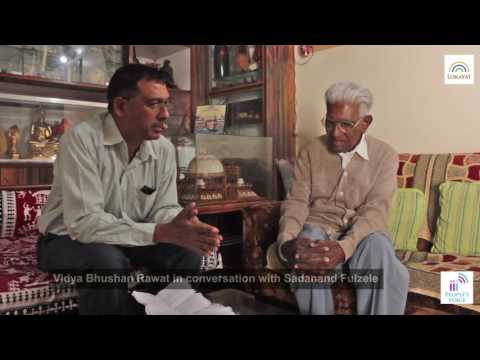
It is astonishing that not much is known about the man who was one of the prominent figures of Dr Baba Saheb Ambedkar’s historical return to the roots of Buddhism along with nearly half a million people at the Deekshabhumi ground in Nagpur on October 14th, 1956. Interestingly, Sadanand Fulzele was not an ordinary man in any senses during that period as he was the Deputy Mayor of Nagpur Municipal Corporation and that too with consensus. He was elected on Scheduled Caste Federation ticket for the Corporation in 1952 and won by just one vote to his nearest rival. A man dedicated to Baba Saheb Ambedkar’s mission for life long, I asked him as how did he get in touch with Dr Ambedkar and what was his involvement with Deekshabhumi function.

‘When I was Deputy Mayor that time the states got reorganized. Nagpur got merged in Bombay I.e Maharastra. We people, a deputation of corporation leaders, went to Delhi to meet Govind Ballabh Pant to demand Nagpur as the capital of Maharastra. In Delhi I stayed with our Member of Parliament Tahir Ali Saheb. That time Baba Saheb had written about Deeksha on 14th October to Mewa Ram Kawade and Godbole to come and meet him. Baba Saheb asked them whether arrangements could be made for the Deeksha. They said, yes it will be done as our own person was Deputy Mayor in the corporation. They told him that I was in Delhi. Then he asked me to come over. Then I went to meet Baba Saheb along with senior person in All India Radio at his residence 26 Alipur Road in the evening. We sat there near the gate. After some time Baba Saheb came with the help of Nanakchand Rattu and sat in front of us on the reclining chair. He said, Mewa Ram Kawade and Godbole came and we have now fixed on October 14th. Will you arrange the programme. I said yes. And that was the time Baba Saheb put the responsibility of the programme on me.

After returning from there, I, Waman Ram Godbole, Kawade and others started looking for a suitable place where deeksha ceremony could be organized and we found this place suitable as there was a big slope and even if the rains come the water would easily flow out. So, finally the selection of Deekshabhumi was done. Baba Saheb’s programme was also fixed. Now, the correspondence and other details were to be done and hence the entire responsibility of the programme  fell on my soldiers.’’

It was a huge celebration he says. Photographs of the functions are well placed decorating his drawing room in Nagpur and each event reverberate his mind in passion. ‘’First Baba Saheb took Deeksha through Chandramani ji. He was so overwhelmed that he did not raise his head. Then Chandramani ji gave him panchsheel. Then he got up and said now I have become Buddhist. All those who want to have deeksha should stand up. Then baba sahib gave them trisharan and panchasheel.. and later gave them 22 bows. The people were there for two days. Baba Saheb spoke for nearly two hours. Later in the night Baba Saheb departed for Chandrapur.’’  ‘’Was there any opposition to Dhammadeeksha’’ , I ask
‘’What would have they done ? Many people felt that Baba Saheb should not take Dhamma deeksha and  newspapers reported such stories, but Baba Saheb responded to all the quarries’’ as the programme went for two full days till October 15th evening and the number of people remained the same.

Sadanand Fulzele is not only witness to historical legacy of Baba Saheb but also part of the political party i.e. Republican Party of India and felt that If Baba Saheb had survived a few more years, perhaps the situation would have been different. Unfortunately within two months he passed away and things that would have happened never happened.
He felt that the fight for power was the real reason for disintegration of Republican Party of India. “It was for power. In 1957, RPI was established. Avade Babu wanted to become the Secretary. Dada Saheb wanted Barrister Khobaragade. But Avade Babu did not know it and hence next year Avade Babu, B C Kamble and other formed a different party.
I ask him that there was an allegation that Dada Saheb never wanted to Dhammadeeksha ceremony as he felt politically it would have been detrimental for the party. The charge was leveled none other than Bhau Lokhande, in a conversation with me. ‘No it is not true’, says Sadanand Fulzele and added that some people who wanted to be in the elections that we should not go for conversion. But according to Fulzele, Baba Saheb’s decision was ‘absolutely correct’.

After the Mahaparinirwan of Baba Saheb, Mr Sadanand Fulzele devoted his time and energy to strengthen the Republican Party of India. He was the Nagpur city president of it and later became Secretary of the state followed by All India secretary.  I ask him that Baba Saheb has become so powerful that even the opponents are chanting Jai Bhim. Many Ámbedkarites’ have joined the Sangh camp. He says, ‘ There is nothing in the party today. It is almost finished. Athawale is there but he has also gone with BJP. Now people do not fear BJP and people have started going to BJP’. ‘Is it not wrong’, I ask. He think and perhaps the state of mind is of exasperation and absolute helplessness in the political front when he says, ‘What can be done. There is nothing now. Baba Saheb wanted that RPI should have  people from different communities not exclusive to SCs. Unfortunately it did not succeed. After baba saheb’s passing away.’ In his last days, Baba Saheb was in touch with Samajwadis like Ram Manohar Lohia, S M Joshi, Atreji, I ask. Yes, he says, ‘ Baba Saheb had written a letter to S M Joshi and Atre about Republican Party of India. Since he was not there, things could not move.

He is happy that the movement is spreading everywhere especially in UP. He witnessed the huge gathering of nearly ten thousand persons predominantly the OBCs taking deeksha in Dhamma on December 25th last year under the spiritual guidance of Bhadant Nagarjun Surai Sasai. ‘’There were different communities and not one particular community’’, he says.
There were rumors about Baba Saheb was not from their community among the OBCs. How the annihilation of caste has become caste calculation, I ask.  ‘’Jaati never goes. It is in our mind. Merely laws can’t eradicate it. Unless there is a change in heart in our mind, jaati cant go. We will have to work doubly hard. Can the Dhamma deeksha remove it, I ask.Y es, with dhamma, jaati would be able to eradicate it. When I ask, ‘What are the challenges before us’, he respond saying that ‘People are fighting. Some are joining others. There are changes. Situations are different. UP has powerful Bahujan Samaj Party today. How come a place where Republican Party of India was a strong political force once upon a  time is completely without any cadre or leaders ? ‘UP has a strong RPI organization. Maruya sahib was MP. When Bahuguna was chief minister of UP. He gave allurement, power to all the others and they joined the Congress. The entire Republican Party got decimated. This was the best way of cooption and purchasing leadership through power. Hence, when Kanshiram went with Baba Saheb’s elephant then people supported him. Nobody would have gone to Kanshiram but because of our failure’, he responds.

He acknowledges the hard work done by late Kanshiram though suggest that BAMSCEF initially was not formed to be a political party and hence they separated when Bahujan Samaj Party was formed.  ‘Kanshiram was first government servant. He worked very hard then he made BAMSCEF with the help of government servants, mostly Nagpur friends supported him. BAMSCEF leaders were not happy when they formed political party. But he got support in Uttar Pradesh and Punjab’ says Fulzele.

But what about other places particularly Maharastra where Maharastra’s Dalit Bahujan don’t have their own parties. Is it good to go with communal parties?, I ask.

‘What to do? Athawale’s group is powerful but he is with BJP. Prakash Ambedkar has a group but he has no follower. Right now Athawale, has found people support’. He feel that Dalits are not accepting all those parties as their own parties have failed them. Baba Saheb wanted an inclusive party and not an exclusively scheduled castes outfit but his dream was shattered after his sudden death. The Buddhist movement is helping socially and culturally but not politically. The cultural movement will bring more changes than the political party’ he says.

And finally, one of the things which I always pondered over and asked many Ambedkarites as why do they think Savita Ambedkar, the wife of Baba Saheb, was responsible for the death of Baba Saheb Ambedkar though many said it is wrong to blame the person who devoted her life for Baba Saheb Ambedkar and later for the mission, Fulzele has no straight answer though he does not blame her outrightly but says that, ‘About her Maharastra people had misgivings. They felt that she had given Baba Saheb slow poison. Once Athawale brought her on the dais of his party but people did not accept her’. Unfortunately, he did not feel it that the politicians should have taken it upon themselves to speak about this but at certain point of time the extreme voices look more legitimate while those talk of ‘reasoning’ are considered as betrayer of the cause.

Sadanand Fulzele is approaching 90s of his life. He is still active and aim to develop Deekshabhumi a much loved historical place of destinations for people interested in the Ambedkarite Buddhist movement. Born in 1928 he plunged into politics after completing graduation. He has three sons and a daughter.

Sadanand Fulzele continues to dedicate his time and energy to strengthen the Buddhist movement started by Baba Saheb Ambedkar. His life has been that of dedication and silently working towards his mission without much being in limelight. He says that he is not much into writing but we hope he would do so in the greater interest of the movement.

To listen to the detailed  conversation with Mr Sadanand Fulzele please click to the link